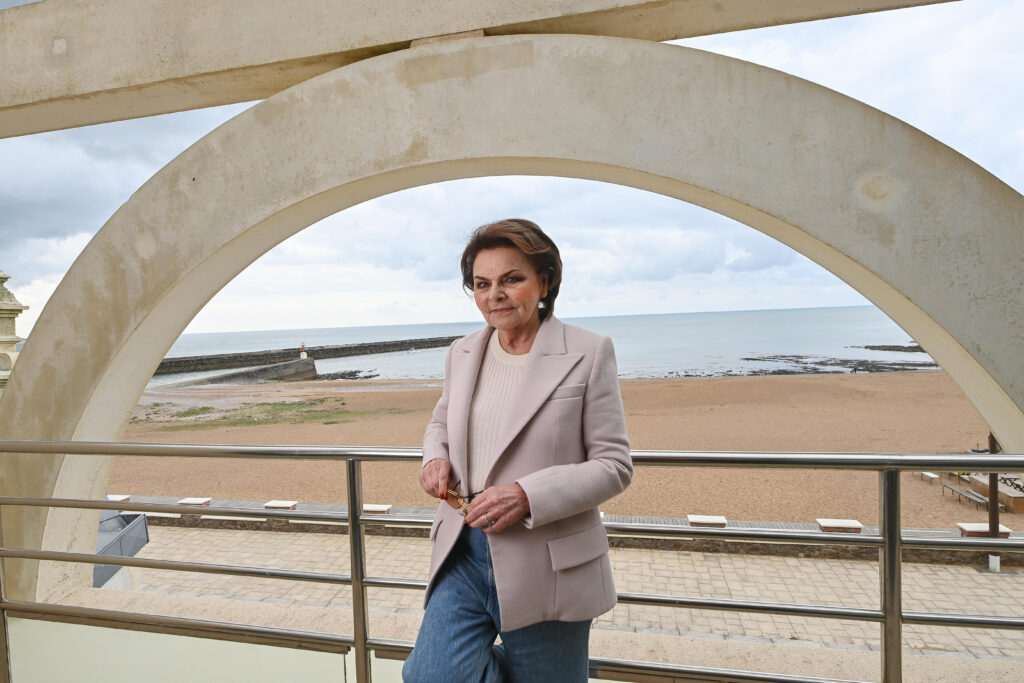
Annette Roux: ‘The Paris Nautic Show must invent its own model’
Chairwoman of the Beneteau Foundation, Annette Roux has held positions of responsibility within the group for sixty years. A privileged witness to the evolution of Parisian boat shows, she offers a clear-eyed analysis of the challenges facing the Paris Nautic Show at Le Bourget. Between heritage and innovation, her perspective sheds light on the challenges facing a sector in the midst of change.
January 1962 marked a turning point for the nautical sector. The entire industry gathered at La Défense, at the CNIT*. Gone were the days of trade shows on the banks of the Seine. This move raised many questions. It is never easy to rebuild everything from scratch, to bring a trade show to life while managing to stay fully in tune with the times.
Yet, at the CNIT, the magic happens. The venue plays a big part in this: everything is brought together on five levels, with the masts touching the sky beneath the enormous concrete vault. The effect of gigantism enhances the exhibition.
In 1965, Annette Roux, then aged 22, attended her first trade fair at the CNIT. The CNIT had become a much-anticipated event for professionals and individuals alike. ‘There was a lot of enthusiasm,’ she recalls. ‘It was a mix of industry, innovation and sport.’ That year will be remembered for the historic handshake between General de Gaulle and Éric Tabarly. ‘I am delighted to see you at the end of your journey and congratulate you with all my heart,’ said the Head of State. ‘General de Gaulle’s visit contributed to the fact that for years the boat show was inaugurated by a head of state or prime minister,’ recalls Annette Roux. ‘Everyone who had the opportunity to visit the CNIT has fond memories of it,’ she says.
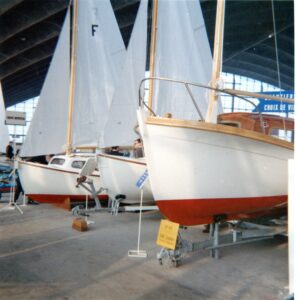
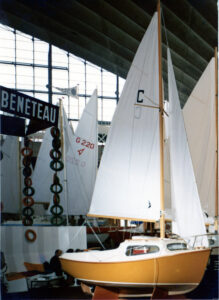
Beneteau stand, Boat Show, 1965
In the early 1990s, a new chapter began. The show moved to Porte de Versailles. ‘Leaving the legendary CNIT venue meant we had to redefine the show,’ admits Annette Roux. The challenge was not only to attract visitors, but also to transform the event into a promotional show. ‘The size of boats had gradually changed. The new venue was better suited to this, and a series of initiatives enabled it to establish itself over time.’ “This new venue helped to professionalise the show, making it the most professional of all consumer shows, and to attract foreign visitors, giving it a new, more international dimension. “Expansion to coastal regions, opening up to marinas, integration of new water sports: the show became more than just a place to buy, but a real tool for promoting water sports. Over the decades, Paris established itself as an unmissable event in the nautical calendar.
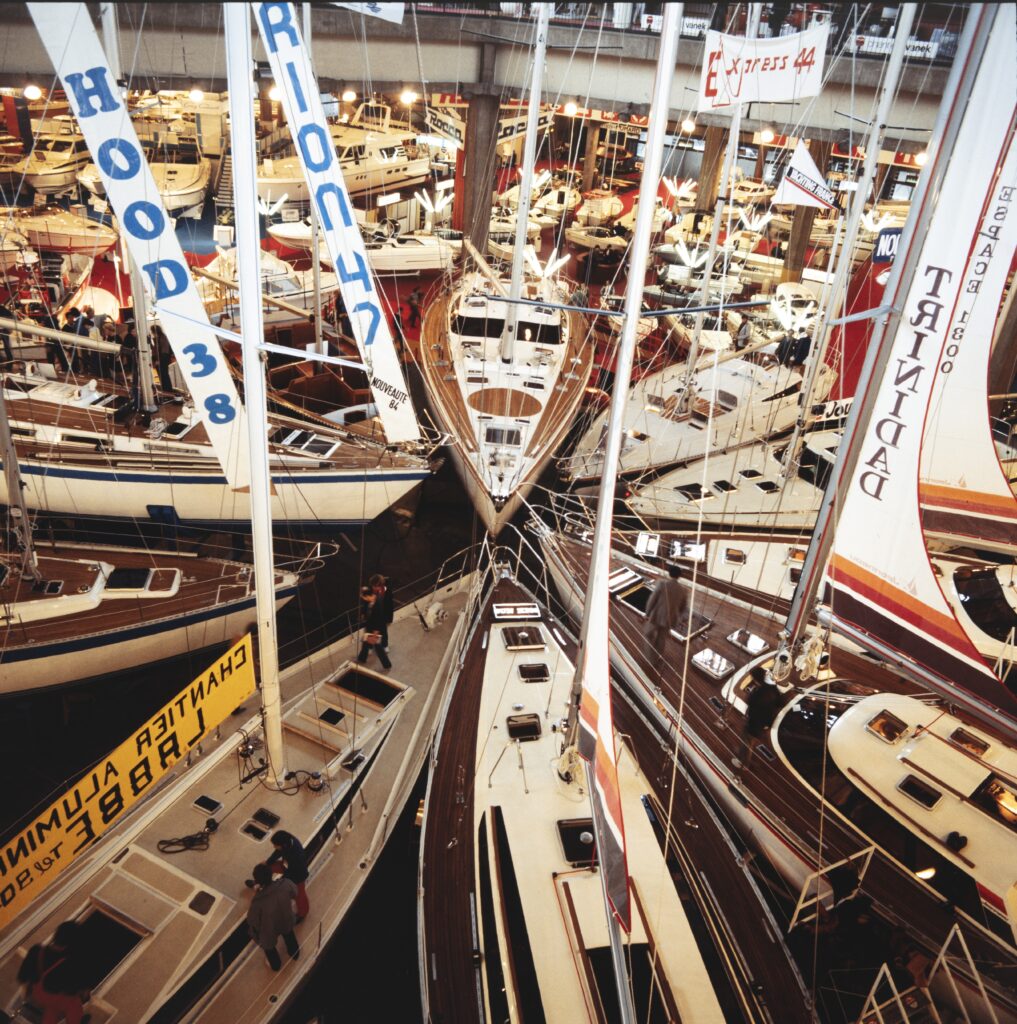
Marguerite at the CNIT, Paris Boat Show, 1984 ┬®Guy Leveque
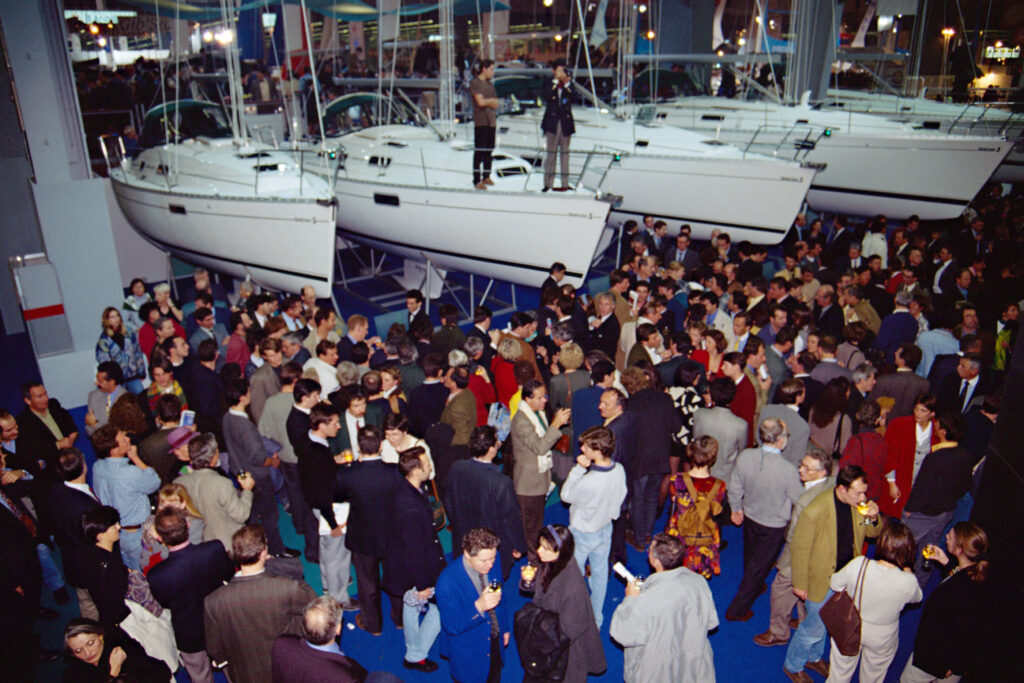
Beneteau stand, Boat Show, 1994
Today, Annette Roux is watching the launch of the Paris Nautic Show at Le Bourget with interest. ‘Relaunching a boat show near Paris is an excellent initiative. The Le Bourget Exhibition Centre makes it easier to transport large boats, which is in line with current market realities.’
But for the president of the Beneteau Foundation, the challenge lies elsewhere: ‘A boat show cannot simply reproduce what existed before. The Paris Nautic Show must determine its own DNA and write its own story. Public expectations have evolved, as have nautical practices. We need to invent a model that corresponds to our times.’
For Annette Roux, the stakes go beyond simply exhibiting products. ‘A trade show plays an essential promotional role. It’s an opportunity to showcase our boats on a much larger scale than in dealerships, but it’s also a great tool for stimulating our market and promoting the development of water sports.’
This desire to pass on knowledge is reflected in the initiatives of the Beneteau Foundation. At the end of 2024, the Foundation launched the Musée de la Plaisance, a website dedicated to promoting the history of recreational boating in France since the 1950s. On the occasion of the Paris Nautic Show, an article dedicated to the hundred years of the Paris Boat Show was published on the website: see the article.
*CNIT : Centre national des industries et techniques (National Centre for Industries and Techniques)